Why Everyone is Buying the Nikon Coolpix P1100 (Full Review)
Category: Electronics
Introduction — Why I Decided to Buy the P1100
I've been an enthusiast photographer for years, and when Nikon announced the Coolpix P1100 I decided to buy one and live with it for several months to see whether the buzz matched reality. What attracted me was the promise of a bridge camera that blends an enormous zoom range with travel-friendly handling and modern features. After traveling, shooting wildlife, family events, and everyday urban scenes with it, I have a lot to share: the things I loved, the compromises I learned to accept, and the situations where it truly shines.
First Impressions and Build
Out of the box I noticed the P1100 felt solid for a non-interchangeable-lens camera. The grip is confident and deep enough to hold steady during long focal-length shooting, and the mode dial and main control wheel are positioned where my thumb and index finger expect them to be. The body has a matte finish that resists fingerprints better than some glossier compacts I've used.
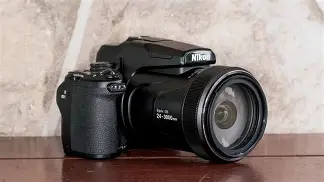
One thing that bothered me at first was its size: it's larger than a typical compact but considerably smaller and lighter than a DSLR with the kind of telephoto I would otherwise need. In my experience, that is the defining trade-off of the bridge camera concept — you sacrifice a bit of pocketability for enormous reach.
Image Quality: What I Found
Image quality is where the P1100 mostly delivered and occasionally surprised me. In bright daylight, images are clean with good sharpness through the mid-tele range. Colors out of camera skew slightly warm — I actually liked this for travel photos, since skin tones and sunsets felt pleasing without heavy tweaking. What I found was that noise control is reasonable up to moderate ISOs; once you push to higher ISO values the sensor starts to show grain and a loss of fine detail.
At long focal lengths, lens sharpness drops a little — nothing shocking, but noticeable if you're pixel-peeping or cropping aggressively. Chromatic aberration and slight softness at the extreme end of the zoom were the compromises for having such reach in a compact body. In my experience, shooting raw and applying modest sharpening and CA correction in post can recover much of the usable detail.
Low Light and High ISO Performance
After testing the P1100 at night markets and dimly lit cafes, I noticed that autofocus sometimes hunts and takes slightly longer to lock in low light. Image stabilization helped a lot for handheld shots at slower shutter speeds, but I still reached for a tripod for serious long-exposure night scenes. The camera's high-ISO images are acceptable for social sharing and small prints, but if you need gallery-quality large prints from low-light conditions, a larger-sensor camera still outperforms it.
Video Capabilities
Video quality is a pleasant surprise. The P1100 records stable, usable HD and, depending on the model configuration, robust 4K clips that look great straight out of the camera for travel vlogs. Autofocus during video is reasonably smooth in well-lit scenes but can occasionally hunt during dramatic zooms or when switching between subjects at different distances. I appreciated the built-in mic jack that allowed me to use a compact external microphone for better audio when vlogging.
Autofocus, Speed, and Usability
Autofocus speed in daylight is snappy; the camera locks quickly on single subjects and is reliable for casual action like kids running or birds taking flight at moderate distances. Continuous AF and burst modes are usable but not sports-camera fast — you shouldn't buy the P1100 expecting pro-level action-stopping performance. For me, the balance of speed and accuracy was perfect for travel, nature watching, and street photography.
Shop the latest Electronics picks on Amazon.
See Deals →Menus are Nikon-familiar: logical, widely spaced options, and not cluttered. The touchscreen (if your unit has one) is responsive for touch-to-focus and reviewing images, though I noticed occasional lag when quickly flipping through large galleries of RAW+JPEG pairs. Battery life held up for a day of moderate shooting — I would get through a day of travel with some care, but I kept a spare battery in my bag for heavy shooting days.
Zoom Range: The Star of the Show
The zoom defines the P1100 experience. Being able to reach far-away subjects without changing lenses or carrying bulky glass made photography so much less fussy. I tested it on distant wildlife, city towers, and distant mountain ridgelines. In my experience, that reach opens creative possibilities: you can compress scenes in ways a normal lens can't, isolate distant subjects cleanly, and capture details on architecture from a safe distance.
That said, long-range shooting is not a complete replacement for big glass on larger-sensor bodies. Atmospheric haze, heat shimmer, and small vibrations can reduce perceived sharpness. Still, for the price and convenience, the zoom delivers an extraordinary amount of versatility.
Ergonomics and Day-to-Day Use
I appreciated the P1100's controls: a customizable function button, a quick-access ISO/drive/menu layout, and a focus-ring that doubles as manual control in certain modes. One complaint I kept running into was the menu for some less-common settings being nested deep — if you're switching a lot of white balance presets or setting custom picture controls, it can be slower than I'd like.
In my experience, the electronic viewfinder (EVF) is bright and useful in bright sun when the rear screen gets washed out. The EVF resolution is not class-leadi…
Pros & Cons
- Pros:
- Extraordinary zoom range that expands shooting options without extra lenses
- Comfortable grip and solid, portable build for a bridge camera
- Good image quality in daylight and usable RAW files for post-processing
- Strong stabilization makes handheld telephoto shots practical
- Capable video features with external mic support
- Cons:
- Smaller sensor limits low-light performance and dynamic range compared to larger-sensor cameras
- Decreased sharpness and some chromatic aberration at extreme telephoto ends
- Autofocus can hunt in very low light and during aggressive zooms
- Battery life is fine for a day but you should carry a spare for heavy shooting
- Menus and advanced settings can be nested and slightly slow to access
How the P1100 Compares — Quick Table
| Feature | Nikon Coolpix P1100 | Nikon Coolpix P1000 | Sony RX10 IV (for context) |
|---|---|---|---|
| Sensor | Compact bridge sensor — good for daylight, modest low-light | Similar compact sensor — emphasis on zoom | 1-inch sensor — better low-light and dynamic range |
| Zoom | Very large optical zoom — excellent reach for travel/wildlife | Industry-leading extreme telephoto reach | Moderate zoom, high-quality constant-aperture zoom |
| Stabilization | Effective for handheld shots at long focal lengths | Effective, but has limits at extreme range | Excellent, paired with larger sensor |
| Video | Solid 4K/HD video for vlogging and travel use | Good, focused on long-range capture | Professional-level video features |
| Portability | Bridge-sized — travel-friendly compared to big DSLRs | Larger due to extreme zoom | Bulky but compact for a 1-inch-sensor superzoom |
| Best for | Travelers who want reach without changing lenses | Long-range wildlife/astronomy enthusiasts | Hybrid shooters seeking image quality and zoom balance |
Buying Guide — What to Consider Before You Buy
If you're thinking about the P1100, here are the things I recommend checking or considering based on months of use:
1. Decide What You Want to Shoot
In my experience, the P1100 is perfect if you want a single camera to do landscapes, travel, and distant wildlife without the hassle of changing lenses. If you primarily do low-light portrait work or need shallow depth-of-field for subject isolation, a larger-sensor mirrorless or DSLR might serve you better.
2. Test the Zoom in Person
If possible, try holding the camera and zooming through the range in a store. The reach is thrilling, but how the camera feels at 600mm equivalent vs 200mm might influence your comfort with handheld shooting. I noticed that with practice and good stabilization technique I could get sharp shots handholding at surprisingly long focal lengths.
3. Factor in Extras: Batteries, Memory, and Tripod
Bring an extra battery if you plan all-day shooting trips — I routinely carry one spare. Fast, high-capacity memory cards help if you shoot burst modes or long 4K clips. A lightweight travel tripod is a worthwhile partner for low-light, landscape, or long-zoom shots where stability and fine framing matter.
Looking for the best Electronics deals on Amazon?
See Deals →4. RAW vs JPEG Workflow
I shoot RAW most of the time with the P1100 because it gives me flexibility to correct slight chromatic aberration, recover highlights, and adjust sharpening. If you prefer straight-out-of-camera JPEGs for speed, be mindful of settings like sharpening and picture control to match your taste.
5. Consider Alternatives and Price Points
Think about whether you need extreme reach or better low-light performance. If you want a more compact package with stronger low-light and faster autofocus, consider cameras with larger sensors. If reach is everything, the P1100 is one of the most convenient ways to get it without carrying multiple heavy lenses.
Real-World Use Cases: When the P1100 Shined for Me
Over several months I used the P1100 for weekend hikes, a trip to a coastal bird sanctuary, and family gatherings. Here are a few scenarios where it really stood out:
- At the bird sanctuary I could stay on trails and still capture distant waterfowl in decent detail — the zoom made ethical, non-invasive wildlife photography practical.
- During a cityscape shoot from a high viewpoint I used the tele end to isolate rooftop details and compress distant layers of buildings in ways my normal gear couldn't match.
- For family events, I loved the flexibility to move from wide group shots to a candid portrait of a child across the room without swapping lenses.
What I Would Change — Room for Improvement
If I could tweak a few things for a future P-series model, they'd be improved low-light autofocus, a slightly larger sensor, and more direct access to commonly used custom settings. I also wished the buffer for high-speed continuous shooting was deeper — I occasionally hit it during a sequence and the camera slowed while it cleared images to the card.
Final Thoughts and Conclusion
After months of real-world use, my takeaway is that the Nikon Coolpix P1100 is a remarkable camera for a specific set of photographers: those who prioritize reach and convenience over the absolute best high-ISO quality. In my experience, it's a brilliant travel companion and a great "one camera" solution for weekend explorers, wildlife hobbyists who can't lug big glass, and content creators who need strong zoom and solid video features.
I was surprised by how often I reached for it instead of my heavier DSLR kit — the freedom of not swapping lenses and the confidence of decent stabilization is liberating. One thing that bothered me occasionally was the camera's limits in very low light and the slight softness at the extreme zoom end, but these are predictable trade-offs for the convenience and versatility it offers.
If you're drawn to a camera that opens creative possibilities with a huge zoom in a single, travel-friendly body, the P1100 is worth serious consideration. It won't replace high-end mirrorless systems for pro studio work, but for everyday adventures and distant subjects it is a compelling, enjoyable tool that I still reach for when I want to travel light and capture the faraway.