The Ultimate Showdown: Magstor Thunderbolt 3 Lto Drive vs Acer Aspire 14 Ai 2025 for 2026
When shopping for technology in 2026, buyers face an array of specialized devices aimed at very different problems. On one side stands the Magstor Thunderbolt 3 LTO drive—a purpose-built archival backup device designed for long-term storage, high-capacity archives and regulated retention. On the other side is the Acer Aspire 14 Ai 2025, a compact, general-purpose laptop marketed to professionals, students and everyday power users who want a balanced mix of mobility, performance and modern connectivity.
This article compares the two in practical terms: what each is actually for, how they perform in real-world scenarios, who benefits most from each, and how to decide which is the better buy depending on needs. Because these two products serve different roles, the "showdown" is less about one being objectively superior and more about matching tool to task. The analysis that follows addresses common buyer concerns—durability, speed, compatibility, total cost of ownership, and future utility—so readers can make an informed choice for 2026.
Quick overview: what these devices are and who they target
Magstor Thunderbolt 3 LTO Drive
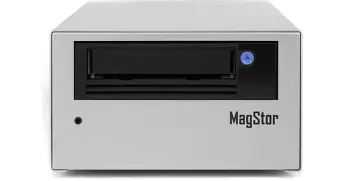
The Magstor Thunderbolt 3 LTO drive is a professional tape-storage device that connects via a Thunderbolt 3 interface. It is designed for large-scale backups, media production archives, and long-term data retention where cost-per-terabyte and data longevity are priorities. Typical buyers include small post houses, independent filmmakers, IT managers at SMBs, and anyone who needs an offline, durable backup medium for multi-terabyte datasets.
Acer Aspire 14 Ai 2025
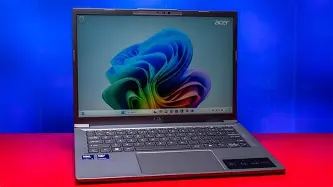
The Acer Aspire 14 Ai 2025 is a 14-inch ultraportable laptop aimed at productivity-focused users. It blends portability with modern connectivity and an emphasis on AI-accelerated features (for tasks such as on-device assistance, intelligent power management, and content enhancement). Its buyer profile includes students, hybrid workers, content creators who need a light travel machine, and professionals who value screen size and battery life in a compact chassis.
Detailed product analysis
Design and build
Magstor Thunderbolt 3 LTO Drive: The design focus is functional—robust enclosure, reliable tape loading mechanism and serviceable internals. Because tape drives are often rack-mounted or stored in media rooms, manufacturers prioritize mechanical reliability and serviceability over sleek consumer aesthetics. The Thunderbolt 3 interface is intended to make connection to modern workstations straightforward.
Acer Aspire 14 Ai 2025: The Aspire 14 typically emphasizes a slim, lightweight chassis with a 14-inch display that balances screen real estate and portability. Build materials tend to be a mix of aluminum top covers and polycarbonate bottoms in this class, offering a premium feel without entering the premium-price bracket. Keyboard comfort, trackpad quality and hinge sturdiness are important real-world traits for daily use.
Performance and workflow
Magstor Thunderbolt 3 LTO Drive: Performance is measured differently for tape: sequential write/read throughput, reliability under continuous loads, and compatibility with backup software. In workflows such as video archiving, the drive serves as the final cold-storage destination after project completion. Tape excels at large sequential transfers and long-term retention; it is not intended for frequent random reads, edits-in-place, or as a primary live-storage medium. For content creators, the real benefit is a low ongoing cost per terabyte and a physical air-gap for disaster protection.
Acer Aspire 14 Ai 2025: The laptop’s performance profile focuses on CPU and integrated GPU capability for productivity applications, web tasks, light media editing, and AI-accelerated routines such as transcription or image upscaling. Real-world evaluation looks at day-long battery life, snappy responsiveness during multitasking, and the ability to drive external displays or connected peripherals—important for remote presentations and hybrid workflows.
Connectivity and compatibility
Magstor Thunderbolt 3 LTO Drive: Thunderbolt 3 is widely available on many professional workstations and modern laptops. It offers high bandwidth and PCIe tunneling, which benefits host-based backup software. Buyers should confirm driver support and backup application compatibility (some tape software requires specific drivers) and ensure the host machine can supply adequate power or that the drive has its own power source for stable operation.
Looking for the best Laptops & Computers deals on Amazon?
View Offers →Acer Aspire 14 Ai 2025: Expect a mix of USB-C/Thunderbolt-capable ports, USB-A, HDMI or DisplayPort, a microSD slot and a headphone jack. Wireless standards such as Wi‑Fi 6/6E and Bluetooth 5.x are likely, with optional LTE/5G variants in some configurations. For users planning to attach a tape drive, confirm the laptop’s Thunderbolt 3 or equivalent port and ensure BIOS/OS support for peripheral storage devices.
Maintenance, durability and longevity
Magstor Thunderbolt 3 LTO Drive: Tape drives are mechanical devices that require occasional cleaning and proper storage of cartridges. Their lifespan in archival use is strong—tape media stored in proper conditions can last decades. The drive itself has moving parts subject to wear, so warranty and maintenance options matter. For businesses, a service agreement and spare cartridges are sensible purchases.
Acer Aspire 14 Ai 2025: Laptops are consumable over time: battery capacity degrades, and performance may lag after several years. Repairability varies; battery and storage upgrades are often possible, while CPU or GPU upgrades are not. For users who travel, hinge durability and keyboard resilience are practical concerns.
Pros & Cons
Magstor Thunderbolt 3 LTO Drive
- Pros:
- Excellent long-term storage and lower cost per TB for large archives.
- Physical air-gap option for ransomware protection when tapes are offline.
- Reliable for sequential large-file transfers (common in media workflows).
- Thunderbolt 3 connectivity simplifies access to modern workstations.
- Cons:
- Not suitable for random access or as primary working storage.
- Requires media management (cartridge labeling, storage conditions, cleaning).
- Upfront hardware costs and potential need for tape management software.
- Mechanical nature means potential for wear and maintenance needs.
Acer Aspire 14 Ai 2025
- Pros:
- Portable, light and suitable for daily productivity tasks and travel.
- Balanced mix of performance and battery life for hybrid work.
- Modern connectivity for peripherals, displays and networks.
- On-device AI features can accelerate common tasks and improve workflow.
- Cons:
- Limited upgradeability beyond storage and memory in some SKUs.
- Not a replacement for high-end desktop workstations for intensive rendering.
- Battery degradation over several years is inevitable.
- Smaller chassis limits cooling under sustained heavy loads.
Comparison table
| Characteristic | Magstor Thunderbolt 3 LTO Drive | Acer Aspire 14 Ai 2025 |
|---|---|---|
| Primary purpose | High-capacity archival and backup | Daily computing, productivity, light content creation |
| Portability | Transportable but typically stored in media rooms | Designed for mobility and travel |
| Interface | Thunderbolt 3 (high-bandwidth external storage) | USB-C/Thunderbolt-capable ports, Wi-Fi, Bluetooth |
| Best for | IT backup strategies, video archives, compliance retention | Students, remote professionals, light editors |
| Access pattern | Sequential reads/writes; not random access friendly | Random and sequential access for apps and files |
| Longevity | Media lasts decades with proper storage | Typical consumer device lifecycle (3–5 years optimal) |
| Maintenance | Requires tape cleaning and cartridge management | Software updates; occasional hardware service |
| Typical buyer concern | Data integrity, capacity, cost per TB | Performance, battery life, portability |
Real-world use cases and what buyers typically care about
When the Magstor Thunderbolt 3 LTO Drive is the right choice
For small video production shops and freelance filmmakers who complete projects and must keep original footage for years, tape remains an efficient archive. Similarly, IT administrators responsible for regulatory retention (financial records, legal documents, medical imaging) often prefer tape because it provides predictable, auditable offline storage at low cost per terabyte.
Buyers in this group care about:…
- Long-term data integrity and media lifespan.
- Low ongoing storage cost per terabyte.
- Workflow compatibility with existing backup software.
- Physical security—an offline tape provides an air-gap against network threats.
When the Acer Aspire 14 Ai 2025 is the right choice
For students, consultants, hybrid workers and editors who need to move between home and office, the Acer Aspire 14 Ai 2025 offers an all-in-one solution. It runs daily apps, handles video conferencing, supports light photo/video editing and can drive external monitors for desk setups. The laptop is also an approachable platform to pair with external storage solutions (including tape drives) when backups are needed.
Buyers in this group care about:
- Battery life to last workdays away from outlets.
- Comfortable keyboard and reliable webcam for meetings.
- Weight and durability for daily transport.
- Ports and wireless support to connect to peripherals and networks.
Buying guide: how to choose between these two very different tools
Step 1 — Define the problem to solve
Ask whether the need is to store and protect large volumes of data long-term or to have a daily computing platform for productivity. If the primary goal is archival retention and the dataset is many terabytes, a tape drive (or tape-based strategy) will almost always be part of the most cost-effective plan. If the need is mobility and day-to-day work, the laptop is the right category.
Step 2 — Consider integration and compatibility
For Magstor: confirm that workstations or servers have compatible Thunderbolt 3 ports and that chosen backup software supports the tape format and drive. Evaluate whether a dedicated backup server is needed, and consider off-site rotation policies for cartridges.
Looking for the best Laptops & Computers deals on Amazon?
Browse Now →For Acer: verify the ports and wireless features are sufficient for the intended workflow—display outputs for external monitors, Thunderbolt for fast external drives, and adequate Wi‑Fi for frequent cloud syncs.
Step 3 — Balance cost, capacity and total cost of ownership
For archival needs, calculate the true cost per terabyte including the drive, media cartridges, storage racks and any required software licenses. Factor in maintenance and lifecycle replacement. For laptop purchases, consider the balance of CPU, RAM, and storage for typical workloads; larger initial investment in a faster configuration can extend useful life and defer replacement.
Step 4 — Consider workflow and recovery objectives
Think in terms of recovery time objective (RTO) and recovery point objective (RPO). Tape archives excel at low-cost retention (RPO) but can increase RTO because restoring many terabytes from tape can be slower than from disk-based systems. If fast restores are crucial, combine tape for deep archives and fast disk/SSD for recent backups.
Step 5 — Future-proofing and scalability
For organizations, modularity matters. Tape libraries and drive fleets scale by adding cartridges and drives; a laptop’s scalability is limited to what the chassis supports. When planning purchases, consider how needs will evolve over 3–5 years and choose devices or ecosystems that can grow without frequent full replacements.
Practical setup tips
- For tape backups: maintain a clear labeling and cataloging system for cartridges, keep a cleaning schedule for drives, and store media in climate-controlled conditions.
- For laptop users who also need archival backups: adopt a hybrid approach—work from internal NVMe/SSD, keep a local external disk for fast backups, and rotate copies to tape or cloud for long-term retention.
- Test restores regularly. Backups are only useful if they can be recovered; scheduled restore tests reduce risk of surprises when data must be retrieved.
- Check vendor firmware and driver updates for both devices and ensure they are applied in maintenance windows to avoid compatibility issues.
Final thoughts and conclusion
In the 2026 context the comparison between the Magstor Thunderbolt 3 LTO drive and the Acer Aspire 14 Ai 2025 is fundamentally a comparison between a specialist archival tool and a generalist portable computer. Each excels in its domain: the Magstor drive for cost-effective, long-term, offline data retention; the Acer laptop for everyday productivity, mobility and AI-enhanced workflows.
Buyers should not expect one device to replace the other. Instead, evaluate needs: prioritize the Magstor Thunderbolt 3 LTO drive when the mission is durable backups, regulatory compliance or maintaining large media archives. Choose the Acer Aspire 14 Ai 2025 when mobility, a balanced performance profile and on-device productivity define success. For many professionals—especially in media and IT—the ideal strategy combines both: use a capable laptop like the Aspire for creation and day-to-day work, and a dedicated LTO drive for long-term, secure archives.
Ultimately, the smart purchase is the one that fits a clearly defined workflow and budget. Assess current demands, anticipate growth, and match the device to the task: the Magstor Thunderbolt 3 LTO drive for archival solidity, and the Acer Aspire 14 Ai 2025 for mobility and modern productivity.